

Wrist pain from typing is usually an overuse ache. The wrist spends hours bent back or angled sideways while the fingers work, and the tendons and the nerve that run through it get irritated. Changing the wrist angle and taking regular breaks are the fixes with study evidence behind them. Tingling, numbness or a weak grip point to a nerve and are worth getting checked.
Where it hurts tells you what it probably is
| Where you feel it | What it often points to |
|---|---|
| A general ache across the top of the wrist and forearm after a long day, easing overnight | Overuse strain (often called RSI) |
| Tingling, numbness or pins and needles in the thumb, index and middle fingers, worse at night | Carpal tunnel syndrome (the median nerve) |
| Pain and swelling on the thumb side of the wrist, worse when you grip or pinch | De Quervain’s tenosynovitis (thumb tendons) |
| Numbness or tingling in the ring and little fingers | The ulnar nerve, usually pinched at the elbow |
The NHS lists carpal tunnel symptoms as pain, numbness, pins and needles and a weak thumb, and says they are “usually worse at night”. De Quervain’s causes pain and tenderness along the thumb side of the wrist, and the American Academy of Orthopaedic Surgeons names typing and texting among the movements that make it worse.
Ring and little finger symptoms come from a different nerve. According to OrthoInfo, they happen more often when the elbow is bent, and leaning on the elbow for long periods presses on the nerve. If you type with your elbows propped on a hard armrest or the desk edge, that is worth changing.
Is wrist pain from typing carpal tunnel syndrome?
Usually not. Typing has not been shown to cause carpal tunnel syndrome, and the mouse looks like a bigger factor than the keyboard.
The largest study on this followed Danish workers for a year, with 5,658 answering at follow-up. Using a mouse for more than 20 hours a week was linked to possible carpal tunnel syndrome, and keyboard use had no statistically significant link. The authors concluded that computer use “does not pose a severe occupational hazard” for developing its symptoms.
A 2008 systematic review found “insufficient epidemiological evidence that computer work causes CTS”. Dr Chia Wu, a hand surgeon at Houston Methodist, says the strain of typing with a bent wrist isn’t proven to cause carpal tunnel syndrome, though over time it could predispose someone to it.
What wrist angle does inside the wrist
The median nerve passes through the carpal tunnel, a narrow channel on the palm side of the wrist. When pressure inside the tunnel rises, the nerve gets squeezed.
A 2008 study in the Journal of Orthopaedic Research measured that pressure in 20 experienced touch typists while they typed with their wrists held at different angles. Pressure was lowest with the wrist close to straight, and rose as the wrist bent back or angled toward the thumb. Typing raised it further compared with holding the hand still in the same position. The researchers suggested setting up keyboards and desks so the wrist bends back no more than 30 degrees, and angles toward the thumb no more than 15 degrees, during long computer sessions.
Most people bend the wrist back without noticing. A keyboard set too high does it. So do flipped-up keyboard feet, which tilt the keys toward you, and resting the heel of your hand on the desk while lifting your fingers to reach the keys.
Fixes at the desk
Lower the keyboard. Cornell University’s ergonomics guidance puts the ideal keyboard below seated elbow height and gently sloped away from you, so the hands reach the keys with a straight wrist. If the desk is too high for that, raise the chair and add a footrest. Our desk setup guide covers the heights and the chair guide covers armrests.
Fold away the keyboard feet. A flat keyboard, or one sloping slightly away from you, keeps the wrist from bending back.
Support your forearms. A one-year randomised trial followed 206 engineers who used computers for more than 20 hours a week. The group given a forearm support board reported less discomfort in the right arm than the groups without one. Desk space in front of the keyboard, or armrests at the right height, can do a similar job. Keep the support under the forearm and off the point of the elbow.
Watch the mouse hours. In the Danish study the risk tracked mouse time and not keyboard time. Keep the mouse close and level with the keyboard so you aren’t reaching for it or bending your wrist back to use it. A handful of keyboard shortcuts cuts mouse time too.
Take regular breaks. A Dutch trial split 268 computer workers with neck or arm complaints, across 22 offices, into three groups for eight weeks: normal working, software that prompted extra breaks, and the same breaks with exercises added. In the two break groups, 55% reported recovery against 34% of the controls, and 4% reported getting worse against 20%. Severity scores didn’t differ significantly between the groups, the exercises added nothing over breaks alone, and the break groups were more productive. Our guide to movement breaks has ideas for what to do with them.
Check your shoulders. Slumping forward moves your hands further out in front of you and changes the angle your wrists meet the keys at. If your neck and shoulders ache too, read our guide to shoulder pain from sitting.
Do wrist stretches help?
The evidence is thin. A Cochrane review of 16 trials covering 741 people with carpal tunnel syndrome found limited and very low quality evidence for exercise and mobilisation treatments, nerve gliding included. Dr Wu told Houston Methodist there’s “not one stretch clinically proven to help with wrist pain.”
If a gentle wrist and forearm stretch eases the ache, keep doing it alongside the breaks.
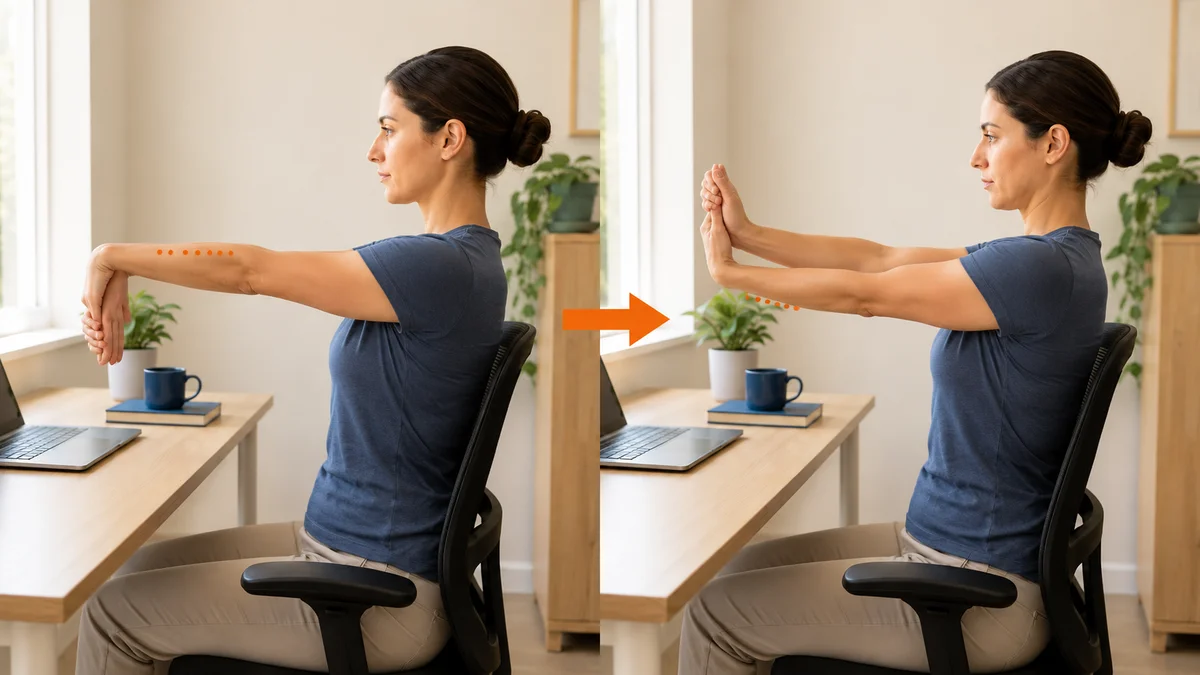
Easing wrist pain from typing at home
For a sore wrist, the NHS suggests cutting down the activities that cause the pain, such as typing, and using an ice pack for up to 20 minutes every 2 to 3 hours. For carpal tunnel symptoms it recommends a wrist splint worn at night while you sleep, and warns you may need to wear one for up to 6 weeks before it starts to feel better.
Dictation software can take over email and first drafts while the wrist settles.
When to worry about wrist pain
Contact NHS 111 if you have severe wrist pain, heard a snap, grinding or popping noise when you injured it, can’t move your wrist or hold things, or have lost the feeling in part or all of your hand. The NHS says these might be signs of a broken wrist or an infection.
See a GP if:
- the pain hasn’t improved after 2 weeks of treating it at home
- you have any tingling or loss of sensation in your hand or wrist
- you have diabetes
- the pain keeps coming back, is getting worse or stops you doing normal activities
Tingling and numbness are on that list from the start. They come from a nerve, and you don’t need to wait two weeks to get them looked at.
FAQ
How long does wrist pain from typing take to go away?
An overuse ache often eases within days of cutting back and fixing the setup. If it hasn’t improved after 2 weeks of home treatment, see a GP. Carpal tunnel symptoms can take months.
Should I wear a wrist brace while typing?
The NHS advice for carpal tunnel is a splint at night. During the day, sort out the keyboard height and angle first.
Is a mouse or a keyboard worse for your wrists?
The mouse, going by the Danish study above. Heavy mouse use was linked to possible carpal tunnel syndrome and keyboard use wasn’t.
Where SitApp comes in
SitApp can’t see your wrists. It watches how you sit through your webcam, processed on your own computer, and nudges you when you slump. Its free break timer reminds you to get up at whatever interval you set. If breaks are what you keep skipping, try SitApp free.
