
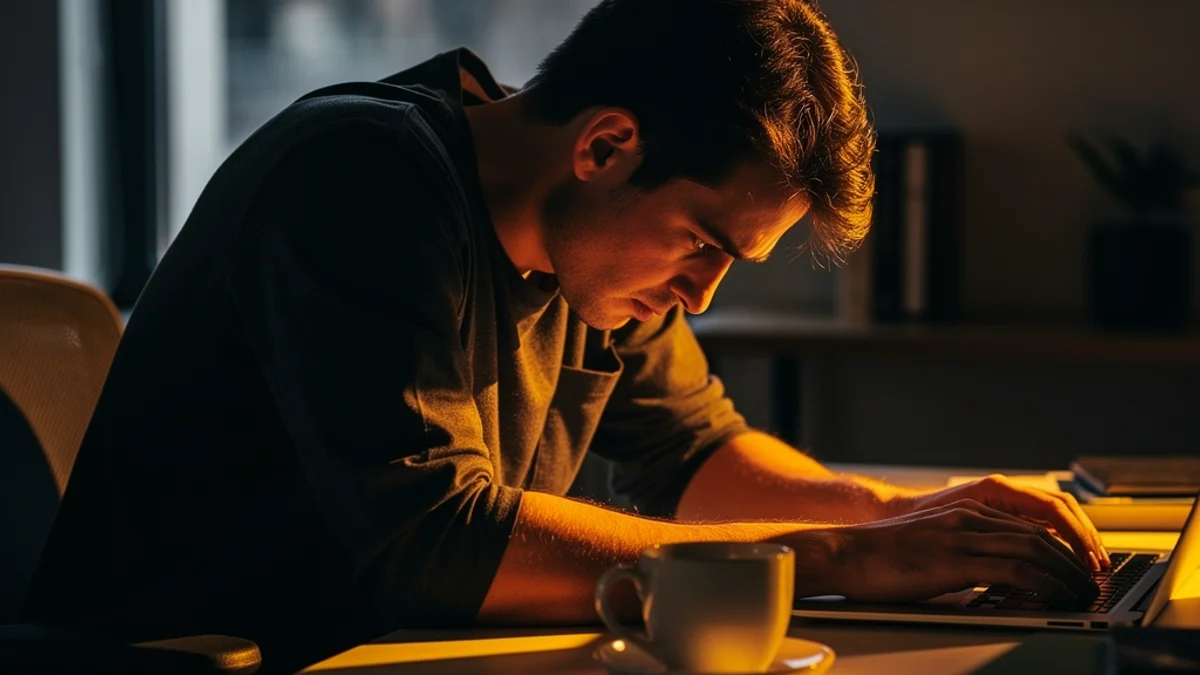
Somewhere around 3pm, your body files a complaint. The screen gets a little harder to read. Your shoulders creep up toward your ears, then give up and roll forward. Your chin drifts toward the monitor. You reach for coffee and blame lunch, or last night’s sleep, or the meeting that ran long.
The afternoon slump is real. It’s one of the best-documented rhythms in human performance, and it isn’t a personal failing or a caffeine deficiency. But here’s the part most “beat the 3pm crash” articles skip: the slump doesn’t just live in your head as tiredness. It shows up in your body as posture. When alertness drops, the way you sit collapses with it - and that collapse then feeds the tiredness right back to you.
This is a two-way street, which is exactly why it’s so fixable. Understand the afternoon slump as a posture problem, not just an energy problem, and you get a lever most people never touch.
The Afternoon Slump Is a Circadian Event, Not a Food Coma
The first myth to clear out of the way: the 3pm dip is not mainly caused by your lunch.
The most reliable review of the research, Timothy Monk’s paper on the post-lunch dip in performance (Clinics in Sports Medicine, 2005), puts it plainly - the dip “is a real phenomenon that can occur even when the individual has had no lunch and is unaware of the time of day.” In other words, take away the sandwich and the clock, and the slump still arrives on schedule. It’s wired into your circadian system, riding on what Monk calls the 12-hour harmonic of your internal body clock.
Lunch isn’t innocent, though. The same review notes the dip “is certainly exacerbated by a high-carbohydrate lunch.” So the big bowl of pasta didn’t create your 3pm fog, but it did turn up the volume on it.
The timing is remarkably consistent. A 2021 study in Frontiers in Public Health on countering the post-lunch dip places the window at 14:00 to 16:00 - roughly 2 to 4pm - when subjective sleepiness rises and sustained attention and working memory measurably decline. Your daytime alertness rhythm simply isn’t strong enough to paper over the homeostatic pressure to rest during that stretch.
So far, this is a story about your brain. The interesting bit is what your brain’s dip does to your spine.
Why the Dip Drops Your Posture
Sitting upright feels passive, but it isn’t. Holding your head balanced over your spine and your shoulders back is low-grade, continuous muscular work - work your nervous system quietly manages in the background as long as you’re alert enough to spare the attention.
The afternoon slump raids that attention budget. As focus fades between 2 and 4pm, the postural muscles holding you up are among the first things you stop recruiting. You don’t decide to slouch. You just stop paying the small ongoing tax of sitting tall, and gravity does the rest. This is the same reason posture reliably erodes the longer you sit, a pattern we dig into in our guide to when people slouch most: a tired, unwatched body takes the path of least resistance, and the slump is the cheapest position to hold.
By mid-afternoon, you’ve also had hours to get there. Office workers are strikingly sedentary - a 2016 study in AIMS Public Health on sedentary patterns in office workers found they spent 66% of their work time sitting, much of it in long unbroken stretches (on average several bouts of 20 to 40 continuous minutes, plus longer ones). Stack that accumulated sitting on top of the circadian dip and you get the perfect conditions for a slump: soft tissues that have slowly given way over the day, plus an alertness low that removes the last bit of will to fight it.
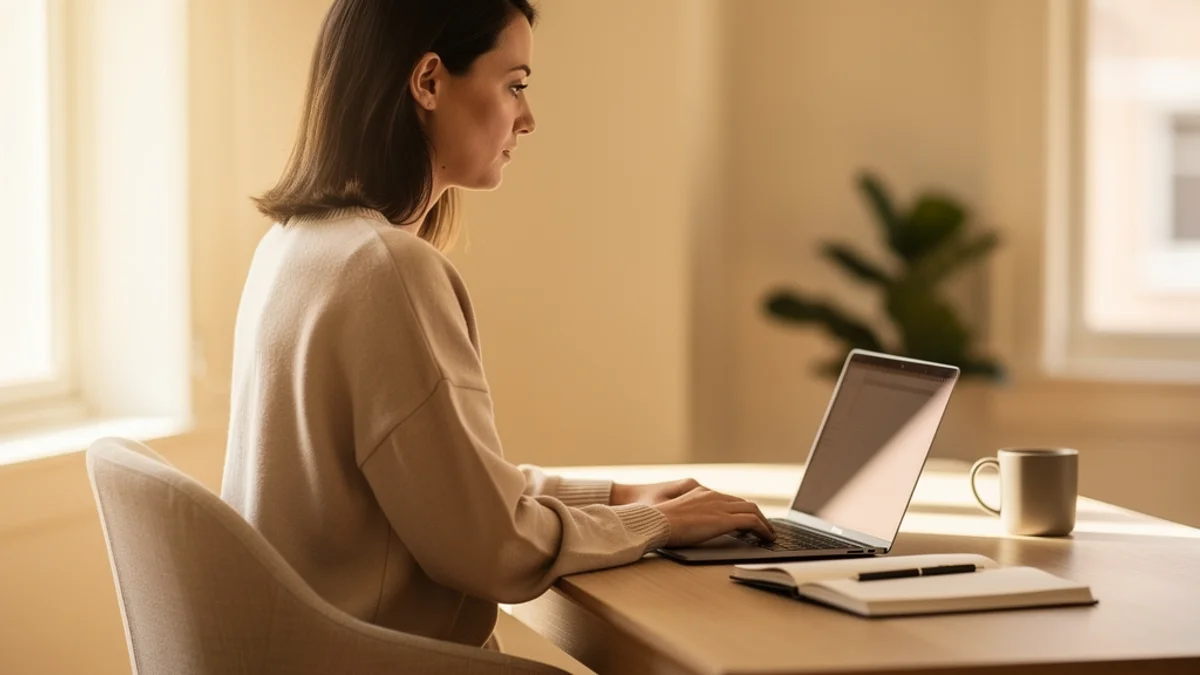
The result is the familiar 3pm shape - chin forward, upper back rounded, the whole tech-neck posture settling in. And that’s where the story stops being one-directional.
The Feedback Loop: Slouching Deepens the Slump
Here’s the insight worth taking away from this whole article. Posture isn’t only a symptom of low afternoon energy. It’s also a cause of it.
Erik Peper, a health scientist at San Francisco State University, ran a study with I-Mei Lin, published in Biofeedback in 2012, that gets straight at this. As he describes in his write-up on how posture influences your energy level, 110 participants rated their subjective energy, then moved in one of two ways: a slouched, collapsed walk, or an upright pattern of opposite-arm-and-leg skipping. Slouched movement dragged subjective energy down - most sharply in the people who were already feeling low - while the upright, expansive movement lifted it.
Peper’s broader work points the same direction: sitting collapsed makes it easier for tired, flat, “can’t be bothered” thoughts to surface, while sitting upright makes energy and focus more accessible. Body position feeds mental state, not just the reverse.
Put the two halves together and the afternoon slump becomes a loop:
- The circadian dip lowers your alertness around 3pm.
- Lowered alertness lets your posture collapse into a slouch.
- The slouch itself lowers your energy further.
- Lower energy makes you slouch harder.
Left alone, this spiral is why 3pm tiredness so often curdles into a 5pm headache and a genuinely unproductive last hour. The good news is that a loop can be broken at any point - and posture is the easiest point to grab.
It Shows Up in Your Own Posture Data
You don’t have to take the studies on faith. The afternoon slump is visible in individual posture patterns, not just group averages.
Anyone who’s used a posture-monitoring tool for a week tends to notice the same thing: their worst posture clusters in predictable windows, and the early afternoon is almost always one of them. That’s the whole premise behind tracking when you personally slouch most - the general 2-4pm window is real, but your exact dip has its own signature. Maybe yours hits at 2:30 after lunch, or at 3:45 when a long focus block finally drains you.
Seeing it laid out changes the game, because the afternoon slouch is almost impossible to catch from the inside. The same fading attention that lets you slump is the attention you’d need to notice you’re slumping. That’s not a discipline problem. It’s a design problem - and it’s why an external cue beats willpower every time in the afternoon.

How to Break the Afternoon Slump (In About Five Minutes)
You can’t reschedule your circadian rhythm, but you can stop it from winning. The most effective interventions all do the same thing: they interrupt the sitting and reset the posture before the loop takes hold.
The strongest evidence is for simply getting up. A 2016 pilot study in BMJ Open on breaking up prolonged sitting compared a full day of uninterrupted sitting against the same day broken up with just 3 minutes of light walking every 30 minutes. The walking condition significantly lowered afternoon fatigue - fatigue was measurably reduced at both the 4-hour and 7-hour marks, exactly the late-day window where the slump bites. Three-minute walks, and the afternoon crash softens.
Here’s a practical afternoon reset built around that:
- Stand up before you think you need to. Set a cue for roughly every 30 minutes through the 2-4pm window. The point is to break the sitting bout before your posture has fully collapsed, not after.
- Take the 3-minute walk. Fill a glass of water, do a lap of the room, take a call standing. Light movement is enough - this isn’t a workout, it’s a circulation and alertness reset.
- Open your posture deliberately. Roll your shoulders back and down, lift your chest, and bring your head back over your spine. Given Peper’s findings, sitting tall isn’t just cosmetic - it nudges your energy back up. A couple of desk-friendly stretches here work well.
- Raise your screen. If your laptop sits low, your head will tip forward the moment your focus drops. A stand that brings the top of the screen to eye level removes most of the reason to crane, so your default afternoon posture is better even when you’re not thinking about it.
- Go easy on the carb-heavy lunch. You can’t skip the circadian dip, but since a high-carbohydrate lunch amplifies it, a lighter, more balanced midday meal keeps the dip from deepening.
If you want the underlying habit rather than just the afternoon patch, our guide on how to stop slouching at your desk covers the movement-break rhythm in more depth, and the link between posture and productivity explains why straightening up buys back more focus than another coffee.
Frequently Asked Questions
Why do I slouch more in the afternoon?
Because sitting upright takes a little continuous attention, and your attention dips in the afternoon. The post-lunch dip is a circadian drop in alertness between roughly 2 and 4pm that occurs even if you skip lunch. As your focus fades, the muscles quietly holding you upright relax, and you sink into a slouch without noticing.
Is the 3pm slump caused by lunch?
Mostly no. Research shows the dip happens even when people eat no lunch and don’t know the time - it’s driven by your circadian rhythm, not digestion. A heavy, high-carbohydrate lunch does make it worse, so the meal amplifies the slump rather than causing it.
Can bad posture actually make me more tired?
Yes, and that’s the surprising part. In one study, moving and sitting in a slouched, collapsed position lowered people’s subjective energy, while an upright posture raised it. So the afternoon slouch isn’t just a sign of low energy - it feeds the tiredness back to you, creating a loop.
What’s the fastest way to beat the afternoon slump?
Stand up and move for about three minutes, then reset your posture - shoulders back, chest open, head over your spine. A study found that breaking up sitting with 3-minute light walks every 30 minutes measurably reduced afternoon fatigue. Movement plus an upright reset beats reaching for more caffeine.
How do I fix my posture at 3pm if I never notice I’m slouching?
You usually can’t catch it yourself, because the fading focus that lets you slump is the same focus you’d need to spot it. The reliable fix is an external cue - a timed movement reminder, or a posture app that watches and nudges you only when you actually slouch - so noticing doesn’t depend on attention you don’t have to spare in the afternoon.
The Short Version
The 3pm slump is a genuine circadian event, and it doesn’t stay in your head. As your alertness dips, your posture collapses - and the collapse quietly drains more energy, deepening the very slump that caused it. Hours of accumulated sitting set the stage; the afternoon rhythm pulls the trigger.
Break the loop where it’s easiest to grab: get up, move for a few minutes, and sit back up straight before 3pm turns into a 5pm headache. Your afternoon posture is the most honest energy meter you’ve got.
Catching the slouch in real time is the hard part, because the afternoon is exactly when you’re least likely to notice. If you’d rather not rely on willpower you don’t have to spare, SitApp’s free tier gives you an hour a day of on-device posture monitoring. The Droid watches through your webcam, everything runs locally - no images stored, nothing uploaded - and it only speaks up when you actually slump. Within a day or two, your own 3pm dip stops being a mystery.
