
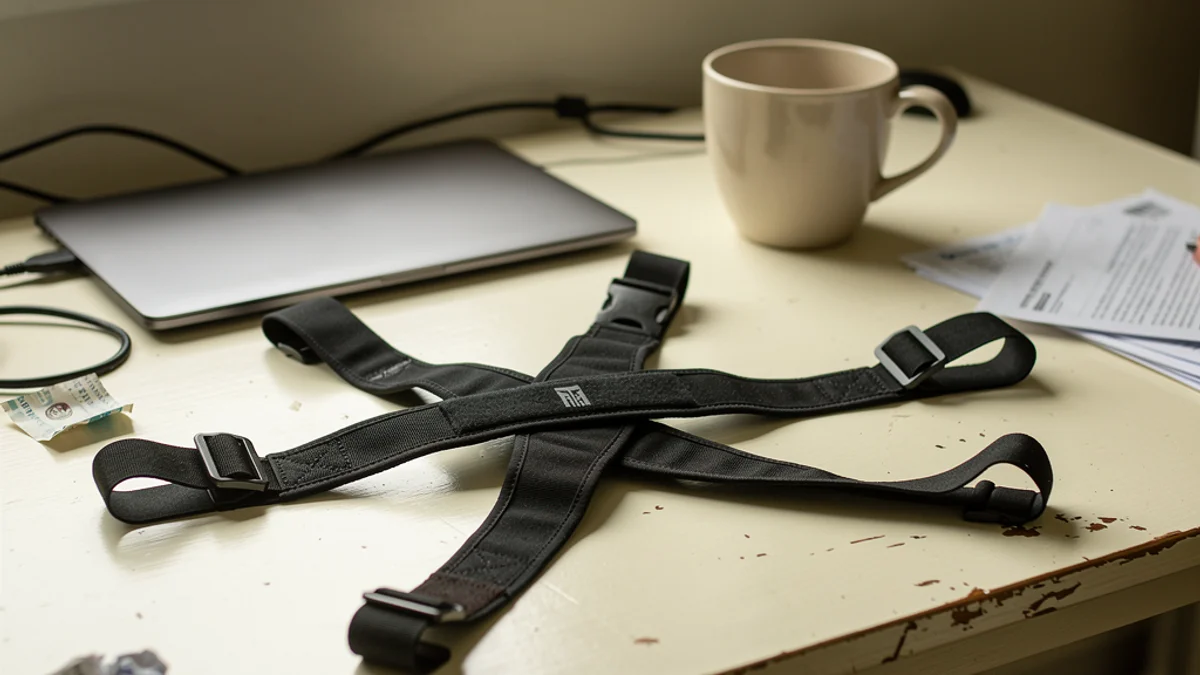
You’ve seen the ads: a $30 strap that promises to pull your shoulders back and fix years of hunching. Maybe one is already in your basket. Before you buy, it’s worth asking the obvious question - do posture correctors actually work, or are you about to spend money on a drawer ornament?
A posture corrector does something real while you’re wearing it: you stand straighter, and one of your back muscles works a little less hard. What it doesn’t do is reliably fix your posture once you take it off. The research is surprisingly thin, mostly short-term, and almost every physiotherapist who has looked at it lands in the same place - a brace is a training wheel, not a cure.
This guide walks through what the studies actually found, where the evidence falls apart, the one real risk of wearing one too much, and the cases where a corrector genuinely earns its place. No affiliate links, no “9 best correctors” roundup - just what the evidence says.
What a Posture Corrector Actually Does
A posture corrector is a cloth or elastic harness that loops over your shoulders and across your upper back. When you slouch, the straps tighten across the front of your shoulders and passively pull them back toward a more upright position. Some add a rigid bar or magnetic insert; most are soft enough to wear under a shirt.
The mechanism is purely mechanical. There’s no sensor, no detection, no learning - it’s a spring that resists you leaning forward. That has two consequences that matter for the whole “does it work” question. First, it works every second you wear it. Second, it stops working the instant you take it off, because nothing about your body has changed. You’ve been held in a position, not taught to hold it.
That’s the gap - held versus taught - and it shows up in every study on these things.
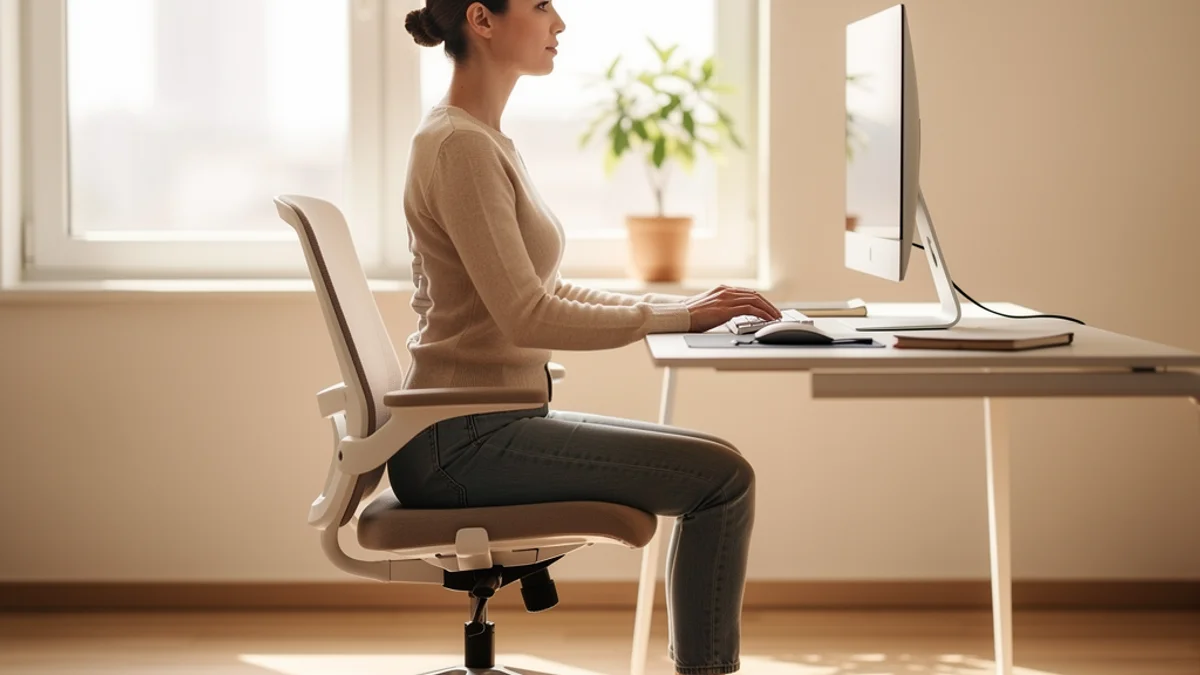
Do Posture Correctors Work? What the Research Says
This is where the marketing and the evidence part ways. Let’s take the studies one at a time.
The most relevant test for a desk worker is a randomized controlled crossover trial of 30 healthy university students (mean age 25.6) wearing a shoulder/scapular brace during a prolonged typing task, published on PubMed Central. The headline result: the brace significantly reduced bilateral trapezius muscle activity (p < 0.01). Sounds like a win - until you read the rest. Rounded-shoulder posture was only slightly better in the brace condition, and not significantly so (p > 0.05). There was no significant difference in pain, fatigue, neck alignment, or the activity of any other muscle tested. The authors concluded the brace offered “some potential benefits” and called for more research.
Read that again: the device changed the physics a little, but it didn’t meaningfully change posture, pain, or fatigue.
Zoom out to the bigger picture and the story holds. A 2025 systematic review of orthotic devices for forward head posture pooled 10 studies (four of them randomized controlled trials) covering 450 patients between 2013 and 2024. Its conclusion was cautiously positive: orthotic devices “can substantially improve postural parameters.” But the reviewers were blunt about the quality - of the 10 studies, only one was rated high quality, eight were medium, and one was low. The studies were too different from each other to even combine into a meta-analysis, sample sizes were small, and follow-up ran only four weeks to three months. In other words, the gains are real in the short term, but we have almost no idea whether they last.
Healthline’s medically reviewed guide (reviewed by Gregory Minnis, DPT) puts the same point more starkly. It cites a review that screened 137 articles, found only six worth assessing, and rated just one of those as high quality - and notes that every study looked only at pain-free people, never patients actually being treated for posture problems. Its bottom line: “It’s unclear if posture correctors improve posture long term.”
So, do posture correctors work? Short-term and mechanically: yes, a bit. Long-term: what evidence exists is from small, short studies, and we mostly don’t know.
The Catch: Wearing One All Day Can Backfire
Remember that first study, where the brace cut trapezius activity? That finding is a double-edged sword. If a strap is doing part of your muscles’ job, your muscles are doing less. Do that for an hour to relieve a tired back and it’s a nice break. Do it for eight hours a day for months and you may be training the very muscles you want stronger to switch off.
Clinicians are pretty consistent on this. In Consumer Reports’ review of posture correctors, spine surgeon Dr. Eugene Wai (University of Ottawa) said it plainly: “The danger is that people would maybe develop dependence on it, and then actually that might lead to worsening of the weakness.” The same article quotes physical therapist Scott Beadnell of Oregon Health & Science University, who was harsher still - he called correctors “gimmicks” and said that in 13 years of practice he had never recommended one.
Worth noting: Wai also said in the same piece that “I don’t think we have good evidence about bad posture leading to chronic back pain” - the panic about posture is often louder than the science. Wearing a brace occasionally is unlikely to hurt you. Worn as a permanent crutch, though, it works against the thing that actually fixes posture: your own muscles doing the work.
When a Posture Corrector Is Actually Worth It
This isn’t a hit piece. There are real cases where a corrector earns its place - they’re just narrower than the ads suggest.
- Short awareness bursts. Worn for 20 to 60 minutes, a brace is a useful physical reminder of what upright feels like. The trouble starts when “20 minutes” becomes “all day.”
- A specific event. A talk, a wedding, a photo shoot - if you want to stand tall for a couple of hours and don’t care what happens afterward, a brace does that job cheaply.
- Paired with strengthening. Clinicians who don’t dismiss correctors outright frame them as training wheels: fine for a few weeks alongside an exercise program you’ll actually do, with a plan to stop wearing it.
- Medical bracing is different. One genuine exception: corrective bracing for adolescents with scoliosis has solid clinical evidence behind it. But that’s a prescribed medical device for a structural spinal condition - a completely different product and purpose from the $30 strap marketed to desk workers. Don’t confuse the two.
What ties those cases together is that none of them involve wearing the thing indefinitely.
What Actually Fixes Posture Long-Term
If a brace only holds you up while you wear it, what closes the gap? The research keeps circling back to two things: strengthening the muscles that hold you upright, and building the awareness to notice when you’ve drifted.
That forward-head-posture systematic review found its best results when orthotics were used alongside rehabilitation exercises - the device plus the work, not the device alone. So the strengthening is non-negotiable. If you slouch into rounded shoulders, our guide to fixing rounded shoulders and the one on forward head posture walk through the specific muscles to target, and these eight desk-worker exercises are a ready-made five-minute routine. None of it needs a strap.
The second piece is the one a brace can’t give you at all: awareness. You can’t correct a slouch you don’t notice, and the reason most of us slouch isn’t that we don’t know better - it’s that we forget, mid-email, mid-meeting, mid-flow. A brace replaces the noticing with a constant pull, which is exactly why the awareness never transfers once it’s off.
A posture app approaches it differently. Instead of holding your shoulders back, it watches your posture and nudges you only when you actually slouch - so you do the correcting, and the habit sticks because you built it. SitApp takes the privacy-first version of this: the on-device AI watches through your webcam, everything runs locally, and no images are ever stored or uploaded. You’re training your own muscles to remember, which is what the studies say actually moves the needle.
If you want the realistic timeline for any of this, our piece on how long it takes to fix bad posture lays out what the RCTs actually show - roughly one to two weeks for awareness, four to eight for measurable muscle change, and longer for habits to set.
Posture Corrector vs Posture App
If you’re choosing between a brace and an app specifically, the practical question is whether you want a result that lasts past day one. A brace gives you an instant result that vanishes when you remove it. An app trains your own awareness, so it compounds. For most desk workers who sit for hours a day, three months out the app has a clear advantage. We broke the full comparison down, including cost, privacy, and the edge cases, in posture corrector vs posture app.
FAQ
Do posture correctors actually work?
Short-term, yes - while you wear one, you’ll stand straighter and one back muscle works less hard. Long-term, the evidence is thin. A randomized trial found a brace cut trapezius activity but produced no significant change in posture, pain, or fatigue, and a 2025 systematic review rated only one of its ten studies as high quality. They cue better alignment; they don’t reliably fix posture on their own.
Will a posture corrector weaken my muscles?
It can if you wear it all day, every day. Because the brace does part of your muscles’ work, relying on it long-term can let those muscles switch off - spine surgeon Dr. Eugene Wai warns this dependence “might lead to worsening of the weakness.” Used in short bursts alongside strengthening, that risk is small.
How long should I wear a posture corrector?
Most clinicians suggest short sessions - roughly 20 to 60 minutes at a time - rather than all day, and only for a few weeks while you build strength elsewhere. Treat it as a temporary reminder, not permanent support.
Are posture correctors worth it for rounded shoulders?
For a brief awareness cue, maybe. For actually reversing rounded shoulders, the lasting fix is strengthening the mid and lower trapezius and stretching a tight chest, not passively strapping the shoulders back. A brace can complement that work but won’t replace it.
Is a posture app better than a posture corrector?
For long-term change in a desk worker, usually yes. A corrector holds you up while you wear it; an app trains you to notice and correct slouching yourself, so the habit outlasts the tool. The brace feels better immediately. Ask the same question after three months and the answer flips.
The Bottom Line
Do posture correctors work? They do one narrow thing well - hold you upright for as long as the straps are on - and the research backs that up. What they don’t do is teach your body anything, which is why the gains rarely survive taking the brace off, and why every careful review lands on “training wheels, not a cure.”
So if you’ve got an event this weekend and want to stand tall for a couple of hours, a corrector is a cheap, reasonable buy. But if you’re trying to undo years of desk slouching, the strap is not where to start. Strengthening the muscles that hold you up and building the awareness to catch yourself slouching - that’s what the studies point to, and no device does that for you.
If you’d rather train that awareness than strap it on, SitApp’s free tier gives you an hour a day of on-device posture monitoring. The Droid watches through your webcam, everything runs locally - no images stored, nothing uploaded - and it only speaks up when you actually slouch. You’ll catch drifts you never noticed by the end of day one, and unlike a brace, the habit it builds stays with you when you log off.
