
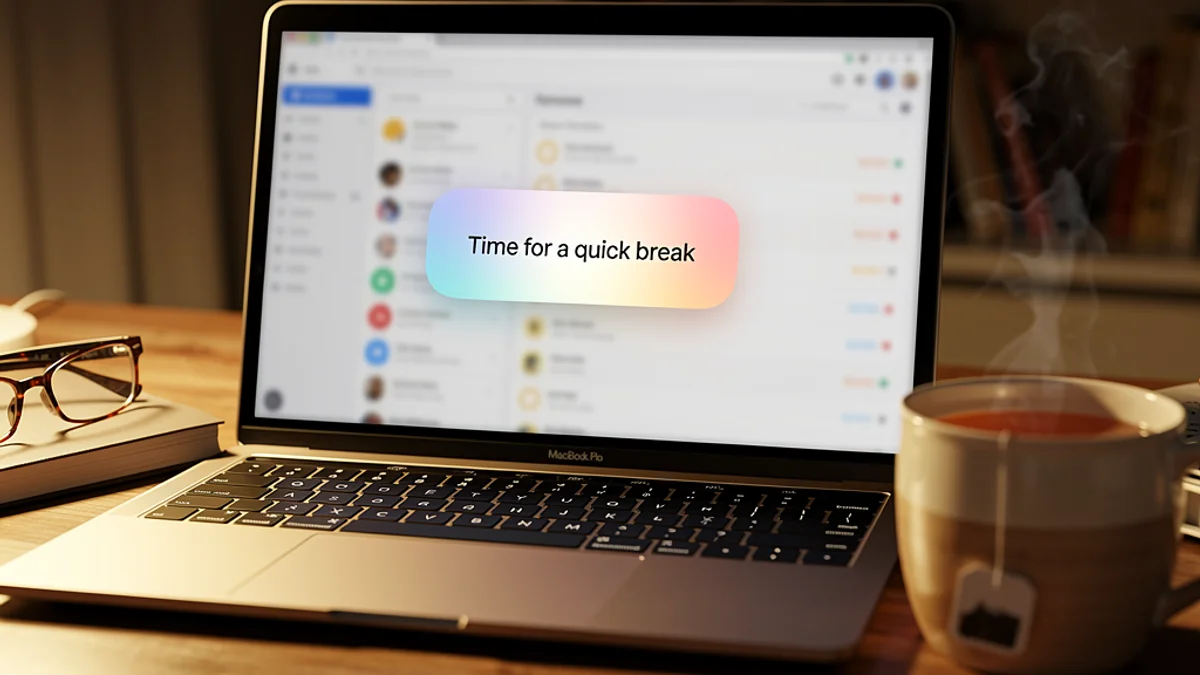
Stretchly tells you when to stop and stretch. SitApp watches how you sit and nudges you when you slouch. They’re both desktop apps aimed at desk health, but they solve different problems entirely.
Full disclosure: I built SitApp. Stretchly is a great tool, and I’ll be upfront about when it’s the better choice.
Why This Comparison Matters
Desk health isn’t one problem - it’s two. The first is prolonged sitting without breaks. Movement breaks every 30 minutes significantly reduce the health risks of prolonged sitting, including back pain and cardiovascular strain. The second problem is poor posture during the time you are sitting. Over 80% of office workers develop musculoskeletal issues from their desk setup. Those issues build up during the hours between breaks, not during the breaks themselves. Two separate problems, two different fixes.
Stretchly tackles the first problem. SitApp tackles the second. Pick based on which one applies to you - or run both.
Quick Comparison
| Feature | SitApp | Stretchly |
|---|---|---|
| Type | AI posture detection | Break reminder |
| Platforms | Mac, Windows, Linux | Mac, Windows, Linux |
| Pricing | Free tier / $3.99/mo Pro | Free (open source) |
| AI detection | Yes (on-device, webcam-based) | No |
| Webcam required | Yes | No |
| Break reminders | Yes | Yes (core feature) |
| Open source | No | Yes (BSD) |
| Customisable breaks | N/A | Highly customisable |
| Screen blocking | No | Yes |
| Posture alerts | Real-time, AI-based | N/A |
Different Tools, Different Jobs
Stretchly: Break Reminders on a Schedule
Stretchly runs in the background and reminds you to take micro-breaks (short pauses) and regular breaks (longer stretches) at configurable intervals. It can display stretching ideas, block your screen during breaks, and track your break compliance.
Stretchly has no idea whether you’re slouching. It fires on a schedule - every 10 minutes, every 30 minutes, whatever you configure. Regular movement breaks reduce the health risks of prolonged sitting regardless of how good your posture is. Even perfect posture becomes harmful if you hold it for hours without moving.
Stretchly is also highly customisable. You can configure break duration, interval, what exercises to show, whether to block your screen, and whether to allow skipping or postponing. For break scheduling specifically, it’s the best free tool available.
SitApp: AI-Powered Posture Monitoring
SitApp uses your webcam and AI to detect when your posture drifts from your calibrated baseline. It only alerts you when something is actually wrong. If you’re sitting perfectly, SitApp stays silent.
Between breaks, you can slouch for 20 minutes straight without Stretchly noticing. SitApp catches that. This matters because research shows slouching measurably reduces breathing capacity - your brain gets less oxygen, your focus drops, and your back slowly accumulates strain you won’t notice until the end of the day.
SitApp also supports location-aware calibration - different posture profiles for your office chair, standing desk, or couch - because “good posture” isn’t one-size-fits-all.
The Research Behind Each Approach
The scientific case for break reminders is well established. A randomised trial in the Scandinavian Journal of Work, Environment & Health found that 55% of workers using break-reminder software reported recovery from neck and upper-limb complaints, versus 34% of controls. Similarly, research shows alternating between sitting and standing can reduce upper back and neck pain by up to 54%.
The case for real-time posture feedback is newer and much thinner. A 2026 review of 14 biofeedback studies reports short-term gains in posture and pain, then cautions that the trials are small and short. The one randomised trial of biofeedback in young adult computer users found no benefit over a control group. Break reminders prevent damage from sitting too long. Posture feedback prevents damage from sitting badly. They’re not competing approaches - they address different time windows.
When Stretchly Is the Better Choice
- You don’t have a webcam or don’t want to use one
- Break scheduling is your priority - Stretchly’s break system is more configurable than anything else out there
- You want free and open source - Stretchly is BSD-licensed, fully free, community-maintained
- You need screen blocking - Stretchly can physically force you off your desk by blocking the screen; SitApp doesn’t do this
- You already have good posture and just need break reminders
- Privacy is a hard requirement - no webcam access means no camera-related surface area at all
When SitApp Is the Better Choice
- You want to know when you’re slouching - Stretchly can’t tell you this; it has no awareness of your posture at all
- Timer reminders annoy you - SitApp only fires when there’s a real posture problem, not on a fixed schedule
- You work from multiple setups - SitApp lets you calibrate separately for your office chair, standing desk, or couch
- You want fewer interruptions overall - AI detection means alerts only when you’re actually out of shape, not every 30 minutes regardless
- You want posture data over time - SitApp tracks patterns so you can see whether things are improving
Can You Use Both?
Absolutely. They’re complementary, and this is genuinely the ideal setup:
- Stretchly handles your break schedule - micro-breaks and stretch reminders on a timer
- SitApp monitors your posture during active work between those breaks
Ergonomics as a whole has the numbers behind it. A meta-analysis of 24 randomised trials covering 4,086 workers found interventions cut the odds of work-related musculoskeletal pain by about a third (pooled OR 0.64), with the neck and lower back among the regions that improved. Combining regular breaks with real-time posture feedback covers both the sitting-too-long problem and the sitting-badly problem.
Pricing
Stretchly is completely free and open source (BSD licence). Zero cost, forever. You can’t beat free.
SitApp has a free tier with core posture monitoring. Pro costs $3.99/month for unlimited monitoring and advanced features like location-aware detection.
If budget is the only factor, Stretchly wins. But SitApp’s free tier gives you real AI posture detection at no cost - and the two tools solve different problems, so cost shouldn’t be the deciding factor between them.
Platform Support
Both support Mac, Windows, and Linux. Both are Electron-based apps. This is a tie.
Bottom Line
Stretchly and SitApp solve different problems. Stretchly is a break timer - it makes sure you move. SitApp watches how you sit in the hours between those breaks. Run both for complete coverage, or pick based on your bigger problem: forgetting to step away (Stretchly) versus sitting badly when you’re at your desk (SitApp).
Ready to try SitApp? Download it free for Mac, Windows, or Linux.
For more options, see our best free posture reminder apps, the full 7 best posture apps comparison, or our Stretchly alternatives roundup.
FAQ
Is Stretchly a posture app?
No. Stretchly is a break reminder app. It tells you when to take breaks on a schedule but doesn’t detect or monitor your posture. For actual slouch detection, you need an AI-based tool like SitApp.
Can Stretchly detect slouching?
No. Stretchly doesn’t use your webcam or any sensors. It works on timers only. Research shows that over 80% of office workers develop musculoskeletal issues from their desk setup - a problem that timer-only tools can’t fully address.
Is Stretchly free?
Yes. Stretchly is free and open source under the BSD licence. SitApp also has a free tier, but Pro features require a $3.99/month subscription.
Should I use Stretchly and SitApp together?
Yes, they work well together. Stretchly handles break scheduling while SitApp monitors your posture in real time between breaks. Together they cover the full picture - sitting too long and sitting badly are distinct failure modes, and each tool addresses one of them.
